Inspection robot vs push camera: when to use each one?
Two different technologies for the same goal: diagnosing the internal condition of a pipe network. Knowing which to apply in each situation makes the difference between an efficient inspection and a wasted day.
What is a push camera?
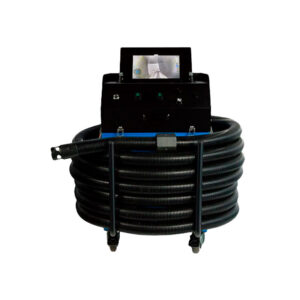
A push camera (also called a push-rod camera or cable reel camera) is the most widely used system for inspecting small and medium diameter pipes. It consists of a camera head with LED lighting mounted on a semi-flexible cable that the operator pushes manually from the manhole or access point.
The image is transmitted in real time to a control unit — typically a portable case — and can be recorded to generate the subsequent report. Modern systems like the ADC-500 from Otter Store include a touchscreen, HD recording and advanced measurement functions.
What is a self-propelled inspection robot?
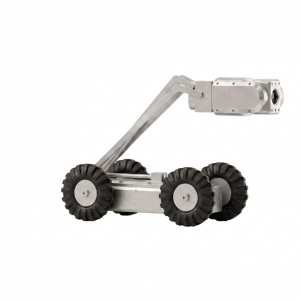
An inspection robot is a motorised wheeled platform that moves autonomously inside the pipe. The operator controls it from the surface via an umbilical cable that transmits image, data and the control signal. No manual pushing is required: the robot advances, reverses and navigates precisely even in sections with water, sediment or gradient.
The Otter Store Inspection Robot is IP68 certified, with a high-resolution LED camera and a wheeled-traction chassis designed for adverse conditions.
Comparison table: robot vs push camera
| Feature | Push Camera | Self-propelled Robot |
|---|---|---|
| Working diameter | DN40 – DN200 | DN100 – DN600+ |
| Maximum length | 30 – 120 m | 200 – 500 m+ |
| Water presence | Limited (up to ~50%) | High tolerance (IP68) |
| Steep gradients | Difficult >15% | No problem |
| Partial obstructions | Gets stuck | Navigates more easily |
| Equipment weight | 5 – 15 kg | 20 – 45 kg |
| Ease of use | High | Medium (requires training) |
| Equipment cost | Lower | Higher |
| Suitable for CCTV reports | Yes (short sections) | Yes (full networks) |
When to choose a push camera?
- ✓ Small diameter pipes: DN40 to DN160 (private installations, downpipes, domestic drains)
- ✓ Lengths of up to 60–80 m from the access point
- ✓ Quick diagnostic inspections with no water in the network
- ✓ Limited budget or occasional use
- ✓ Access through small inspection chambers where the robot does not fit
When to choose an inspection robot?
- ✓ Sewer collectors from DN150 onwards
- ✓ Long sections (more than 80–100 m) where the push cable loses rigidity
- ✓ Networks with flowing water or sediment on the floor
- ✓ Gradients above 15% where the push cable slides back
- ✓ Official inspections for CCTV reports per standard EN 13508
- ✓ Periodic maintenance contracts for municipal networks
The most efficient combination
Most drainage companies and local authorities working with mixed networks opt to have both systems: the push camera for quick diagnostic work on private installations and short sections, and the robot for public network inspection campaigns.
At Otter Store we manufacture and provide technical support for both systems. If you have questions about which configuration best suits your network and budget, contact our technical team — no obligation.
Need technical advice?
Tell us the diameter and conditions of your network and we will recommend the most suitable system. Response within 24 hours.
Free consultation